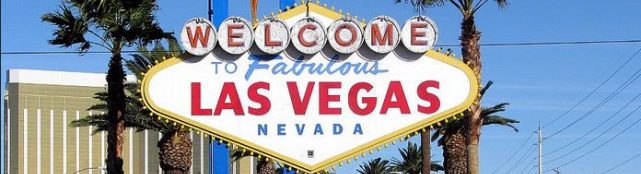
In Las Vegas, Halloween is Nevada Day, when Lincoln did trick AND treat

Abraham Lincoln

Today is Halloween. Theologically a day devoted to warding off evil spirits, kids (along with adults) dress up in often-spooky costumes and solicit goodies in an annual ritual that mainly benefits candy-makers and dentists.

In Las Vegas and Nevada, though, October 31 holds a special significance. It was on this day 161 years ago, in 1864, that the Territory of Nevada became the State of Nevada. Officially, October 31 is Nevada Day, a state holiday observed on the last Friday of the month to create a three-day weekend. For the first time since 2014, the final Friday–today–actually is October 31, and thus the real Nevada Day.

And despite the lack of any historical connection with Halloween, which became popular in the U.S. only later in the 19th century amid immigration waves of Scots and Irish, there is a holiday element to the origins of Nevada Day. The biggest participant hereabouts was none other than the incumbent president, Abraham Lincoln. His treat was the creation of a new Republican-leaning state solely to help rig his re-election in 1864. The trick was the somewhat shady stuff pulled off to make it happen. Continue reading

Las Vegas Review-Journal lauds journalism awards but deep-sixes word of circulation drop

On Sunday, September 21, the Las Vegas Review-Journal published on the front page of its local news section a story with this headline: “RJ wins 28 first-place awards in annual journalism contest.” Spread across all five columns, the prominently displayed, 1,185-word-long article about the Nevada Press Foundation honors jumped to most of another page and included 12 photos of beaming staffers working for the state’s most prominent news organization.

A week later, on Sunday, September 28, the RJ published another item about itself. But this one was much harder to find and contained no pictures. It was buried amid classified ads offering furnished rooms for rent (“own bathroom, kitchen use”) in the middle of the seventh section.

In the tiny type of a legal notice, the RJ published data showing another significant yearly paid circulation decline.

Paying RJ readers have now dropped 77% since the current ownership assumed control a decade ago in 2015. This appears to be far worse than the admittedly dismal national trends in the newspaper industry for the same period–even though the local population in Las Vegas has risen by double the national rate. Indeed, the paid circulation is the paper’s lowest in nearly six decades. One has to go way back to 1968 to find a similar number. What was once a market penetration of 60% of all households in its market of Clark County is down to about 7%.

As a newspaperman long before becoming New To Las Vegas, I find this incredibly sad. It’s especially so because the RJ‘s news product recently has shown some signs of life.

Continue reading

Drop in Las Vegas Forbes 400 members

Las Vegas Forbes 400They don’t make super-billionaires like they used to, at least in Las Vegas. That’s one lesson to draw from the newest edition of the Forbes 400 list, which came out earlier this month. The number of local big billies dropped from six to five. In 2016, the year I became New To Law Vegas, the count was nine. In recent years it’s been as low as two.

But the four Vegans who managed to stay on the list this year and last wildly outperformed the 396 other swells gracing the celebrated list of the country’s heaviest hitters. Collectively, the net worth of of these locals totaled $68.9 billion, a rise of 39%. The Forbes 400 as as whole: up a mere 22.%. Continue reading

Kroger orders its Las Vegas workers to keep mum about senior discounts

Is it possible to do the right thing in a wrong way?  Yes, if you’re Kroger, the giant supermarket chain.

From time to time, publicly traded Kroger, which has 2,700 stores under a variety of names in 35 states, mainly in the South, West and Midwest, rolls out a “Senior Discount” day. It’s 5% off for shoppers 55 years and older. The chain mentions the break in its print ads and often posts a sign near store entrances. Yesterday, September 3, was such a day.

But there’s a big catch, as I learned last night when I, a senior citizen, dashed into a Kroger-owned store (Smith’s Food and Drugs) near the New To Las Vegas world headquarters. You have to request the bennie at check-out or it’s no luck.

Don’t take my word for this. Nearby is a picture of the printed memo that Kroger workers were given for the big day. The bold-faced wording couldn’t be clearer: “Do not offer customers the Senior Discount unless they ask.” I have taken the liberty of highlighting the offending language in yellow.

The only reason I even know about the directive is because after I asked for the discount, the cashier had to scan the barcode next to the written admonition. As a long-time journalist, I’ve developed the skill of reading written words upside-down in case the person I’m interviewing has some interesting documents on the desk. And I’m gotten to be pretty quick with my cell phone camera.

It’s not hard for me to imagine elderly customers drawn to the store by the promised discount who then experience a senior moment and forget to ask for the break at checkout. It’s a terrible look for Kroger, and, perhaps, even a form of senior abuse. AARP, are you pay attention? I invite Kroger’s Cincinnati-based management to respond in the comments section below.

I cheered when a federal judge last year on antitrust grounds blocked Kroger’s bid to take over rival Albertsons. Now there’s another good reason: I don’t want this don’t-ask-don’t-tell discount stuff to spread.

Follow William P. Barrett’s work on X by clicking here.

Follow William P. Barrett’s work on Threads by clicking here.

Follow William P. Barrett’s work on BlueSky by clicking here.