‘What’s it like living in Las Vegas?’

What's it like living in Las Vegas

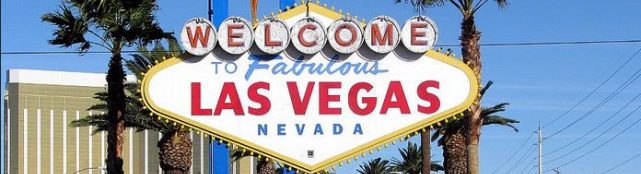
Backside side of the famous Welcome To Fabulous Las Vegas sign on the Strip

It’s a question I hear all the time when traveling, conducting business on the phone or interacting on social media. I tell someone my home is in Las Vegas. The response often is an astonished pause, followed by a breathless, “What’s it like living in Las Vegas?” Or something to that effect. It happened to me during a family trip to Georgia in February, when I was in Los Angeles last month judging a journalism competition, while chatting up someone on the phone in New York last week, and in a Facebook exchange with a long-time friend this week.

It’s almost as though I said I lived in Baghdad, or Pyongyang, or maybe the Moon.

The astonishment, I suspect, has a number of sources, all grounded in the notion that Las Vegas has a reputation as a despicable place not fit for habitation by normal folks (which, of course, helps make it a great place to visit). This reputation perhaps includes perceptions of excessive summer heat, poor air quality, bad local morals, accident-prone drivers, crime, the October 1 massacre, inadequate medical care and under-performing schools.

The “Sin City” nickname probably doesn’t help. Nor does the famous marketing slogan, “What Happens Here, Stays Here.” Nor the 1995 movie “Leaving Las Vegas,” featuring Nicolas Cage’s Oscar-winning performance as a down-and-out Hollywood scriptwriter who moves to Vegas to successfully drink himself to death. (When remembered, the upbeat 1964 song fest film, “Viva Las Vegas,” starring Elvis Presley and Ann-Margret, cuts a bit the other way.)

Some of these factors are undoubtedly valid. But there are 2 million people living in the Las Vegas metro area (a statistic that often surprises people from elsewhere when I cite it), compared with all of 18 at the start of the 20th century just 119 years ago. (Don’t take my word; click here to see the single handwritten U.S. Census enumeration page listing everyone in 1900 in Las Vegas.) The Clark County School District, which includes all of metro Las Vegas, is now the nation’s fifth largest by number of students (another eye-popping number for some). There must be a reason why so many people are here and indeed growing rapidly in number. Continue reading

Poorly rated child illness charity solicits illegally in Las Vegas

poorly rated child illness charityUpdated on April 24, 2019. See end of story.

The phone rang at the New To Las Vegas World Headquarters. The cold caller said her name was Grace Miller. She sought a donation by me to the Childhood Leukemia Foundation, headquartered in far-away Brick, N.J., and asked if I would make a pledge.

I said I would be happy to review any literature she could send me. This apparently was not exactly the answer she hoped to hear. We had a back and forth. But after Miller could not get me to commit to a donation–on what likely was a recorded line, which would be used against me should I decline to pay–she terminated the call.

This afforded me the chance to locate online CLF’s latest financial filings, for the year ending December 31, 2017. They might help explain the extreme urgency of Miller–not actually a person but an interactive computer-generated voice monitored by a human–to get a sight-unseen pledge from me. By CLF’s own filings, the charity spent more than 75% of the money donated on fundraising costs, dwarfing the amount left for, say, helping kids fight illness, the stated mission. Indeed, according to the filings, of CLF’s total expenses for the year, just 21% went to the mission.

Since donors usually want the bulk of their gifts to go to the cause, these are terrible financial efficiency ratios for a charity. How terrible? CLF won’t agree to be evaluated by the Better Business Bureau Wise Giving Alliance, a charity watchdog group that says no more than 35% of donations should be spent on fundraising expense, and no less than 65% of the total budget on the mission. Not sending the BBB paperwork is a huge red flag for would-be donors.

On its zero-to-four-stars scale, Charity Navigator, another leading nonprofit watchdog, gives CLF an overall rating of zero stars. It doesn’t come any lower than that. Last year, Consumer Reports magazine listed CLF on the bad side of its “Best and Worst Charities for Your Donation.” Yelp reviews are no kinder.

On top of all this that, CLF was soliciting illegally in Nevada. With a few exceptions not applicable here, a 2013 Nevada law prohibits non-religious charities from seeking donations in the state without first registering with the Nevada Secretary of State’s office and renewing that registration annually. CLF does not come up in the online database on the Secretary of State’s website as ever being registered. I confirmed this by calling the main office in Carson City. Nor, I was told, was an application from CLF being processed but not yet in the system. Continue reading

Also for Joe Biden, It Didn’t Stay Here in Las Vegas

It Didn't Stay Here

Joseph R. Biden Jr.

It’s anyone’s guess whether, before next year’s presidential election, Donald J. Trump and Joseph R. Biden Jr. will appear on the same platform to debate the great issues of the day. But they both are now on the same platform–right here.

Those of you who follow this space know that I have a long-running feature, “It Didn’t Stay Here.” It consists of stories about folks in trouble elsewhere for something that happened in Las Vegas. It’s a pointed refutation of “What Happens Here, Stays Here,” the well-known marketing slogan of the Las Vegas Convention and Visitor’s Bureau. The full list is nearby.

In 2017, New to Las Vegas, I nominated Trump for the list after a 2013 video surfaced of him partying along the Strip with Russians and Rob Goldstone. He’s the British publicist who later set up the infamous June 2016 meeting in Trump Tower between Donald Trump Jr., brother-in-law Jared Kushner, then Trump campaign chairman Paul Manafort and a clutch of Russians supposedly bearing gifts in the form of Kremlin-sanctioned dirt on Hillary Clinton.

Vegas has a funny way of popping up at the most unexpected of times. On Friday, prominent Las Vegas politician Lucy Flores wrote an essay for the New York Magazine website “The Cut” saying then-Vice President Biden inappropriately smelled her hair and kissed her on the back of her head at a 2014 Democratic campaign rally in a Las Vegas union hall during her unsuccessful bid to be Nevada lieutenant governor. Biden “touched me in an intimate way reserved for close friends, family, or romantic partners—and I felt powerless to do anything about it,” she wrote. At the time Flores was 35 year old; Biden was 71. (Click here to see photos of the rally.) Continue reading

Green Book–the real thing, not the movie–shows racist history of Las Vegas

racist history of Las Vegas

Green Book 1962 edition (courtesy New York Public Library)

The name of the Best Picture Oscar-winning movie “Green Book” comes from a published guide to places where black travelers and tourists could stay without being hassled on account of their race during much of the 20th century after the advent of automobiles. In the movie, the Green Book was used to help guide real-life characters–black pianist Don Shirley (played by Mahershala Ali, who won his own Best Supporting Actor Oscar) and his white driver/bodyguard, Tony Vallelonga (portrayed by Viggo Mortensen)–across the deep South during a 1962 concert tour.

The South, of course, was infamous for its racial intolerance. So it’s easy for folks in other parts of the country to look back and smirk. However, the Green Book–its full name was the Negro Motorist Green Book–quickly came to cover the entire United States.

And it proved to be an interesting measure of racial comity. Based on the paucity of listings in most places, few regions came out looking good.

But few fared as poorly as Las Vegas. Continue reading