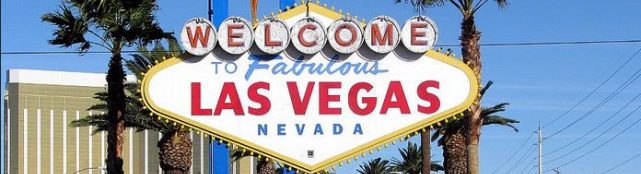
Charity solicitation regulation in Nevada and Las Vegas is elusive

Charity regulation in NevadaIn 2013 Nevada passed a law bolstering its regulation of most charities soliciting for donations, especially over the telephone. Among other things, the law required such charities to file with the Nevada Secretary of State’s Office a financial report such as an IRS Form 990, which the agency “shall … post” on its website. A would-be donor contacted by a cold-calling telemarketer could determine if this was one of the many that spend only 10% or less of donations on its professed charitable cause.

But four years later, the secretary of state’s office still doesn’t post the required financial reports or 990s on its website. Nor does that agency or the Nevada Attorney General’s Office do much to make sure that charities asking Nevadans for their hard-earned dollars are on the up and up or to provided all the needed information. It doesn’t appear, for example, that either of the agencies, which by law share jurisdiction over charities, has even a single staffer devoted exclusively to charitable regulation. The secretary of state’s office is so sloppy that, until I pointed it out, the website listed citations to state law repealed several years ago.

Civil penalties? Cease and desist orders? Revocation of solicitation permissions? Not in Nevada.

I’ve only been New To Las Vegas for barely a year. But as as many of you know, I’ve been writing about charities for decades. To me it’s clear that as it’s being implemented, the Nevada system for overseeing charities is exceedingly weak and an open invitation for sharpies. I put that very observation in writing to flaks for both the SOS and AG–they are elected officials–asking for a response, and got none.

To gain a wider local audience, I’ve written a long essay about the shortcomings I see for The Nevada Independent. This is an donor-funded online news site recently founded by the well-known Nevada journalist Jon Ralston focusing on policy and politics in the Silver State.

Some of the material will be familiar to visitors to this blog, but there’s lots of new stuff. I invite you to read the article by clicking here.

And if you live in Nevada, weep.

Follow William P. Barrett’s work on Twitter by clicking here.

It Didn’t Stay Here: Las Vegas trip by alleged Michigan embezzler

It Didn't Stay Here

Michelle Schneider (courtesy Grand Traverse County, Mich.)

The bug light known as Las Vegas glows far and wide. To remote corners of the country. Places like, say, Traverse City, Mich. That’s a remote, cultured scenic burg of 15,000 on an inlet off the eastern shore of Lake Michigan near the northern tip of Michigan’s Lower Peninsula. (Just before becoming New To Las Vegas, I put Traverse City on a Forbes retirement list.) The town is 2,000 miles from Las Vegas.

If the Traverse City authorities are to be believed, Michelle Schneider saw the glow. They say she embezzled funds from the Traverse City community college where she had worked as a technology specialist for four years to fund a number of personal expenses, including at least one trip to Las Vegas.

Schneider, 46, of suburban Grawn (yep, that’s the name of a place), faces one count of embezzlement for using a credit card issued by Northwestern Michigan College to charge up more than $9,000 in unauthorized expenses. She pleaded not guilty earlier this month in Michigan’s state court system and awaits further proceedings.

That’s enough to earn a nomination to my list It Didn’t Stay Here. The roster highlights folks in difficulties elsewhere for something that happened in Vegas. It’s a mildly satirical refutation of the incredibly well-known marketing pitch of the Las Vegas Convention and Visitors Authority, “What Happens Here, Stays Here.” The full list sits elsewhere on this page. Continue reading

Unregistered charity with high overhead trolls for Las Vegas money

For once,Unregistered charity the cold caller to the New To Las Vegas world headquarters was a real person, as opposed to a computer using voice recognition technology. That made it a little easier to have a meaningful back and forth as she asked for a charitable contribution.

The cause, she said, was something called Veterans Trauma Support Network. I asked for its address, and she said it was based in Orlando, Fla. She described the organization as nationwide in scope, contributions to which would be tax-deductible. I listened patiently to her pitch that the money would help vets cope with PTSD and other ailments.

She said she worked for an outside paid fundraiser named Charitable Resource Foundation. Finally, I asked how much of donations would go to the stated cause as opposed to fundraising expense. Twelve percent, she said somewhat matter of factly.

Oh, I said. So 88% of all the money raised goes to the fundraiser like you?

The caller said coolly she wasn’t going to discuss the terms of her own compensation. As you might imagine, the call ended soon thereafter.

Quick research by me showed that Veterans Trauma Support Network isn’t its own charity at all but a fundraising trade name used by another charity called Crisis Relief Network. According to official websites, CRN’s fundraisers solicit for money under all kinds of evocative, wallet-tugging names. Besides Veterans Trauma Relief Network, they have included Child Watch of North America, Childhood Abuse and Trauma Foundation, Children’s Cancer Relief Foundation and Breast Cancer Relief Network. (The Child Watch department got some bad press in the San Francisco area last year for using pictures of missing children in its fundraising efforts without parental permission.)

That’s an awful lot of causes for a parent organization that according to the first page of its latest tax return had just one paid employee. Nor was that the only surprise. Continue reading

Nevada mountain north of Las Vegas still named for Confederate leader

Jeff Davis Peak (via Wikipedia)

From what I see, folks in Nevada–which became a no-slave state on the Union side in 1864, during the Civil War–are feeling smug about all the Confederate memorials and statues being taken down across the South. Not to mention buildings and institutions named after slave-owning politicians being renamed, especially in the North and elsewhere. The Nevada attitude: nothing to see here.

But maybe not so fast. The state’s third highest point is Jeff Davis Peak. That’s right. It’s named for the same Jefferson Finis Davis of Mississippi who was the slave-owning president of the Confederate States of America during the four-year-long conflict from 1861 to 1865.

The 12,677-foot-high Snake Range summit is 300 miles due north of Las Vegas, southeast of the small city of Ely, off U.S. 6 near the Utah border in the scenic Great Basin National Park. That makes its owner the Federal Government, for those interested in seriously complaining about the name. Continue reading