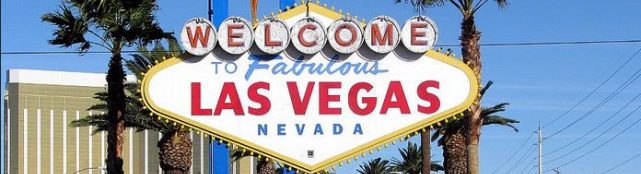
Smaller Reno area matches Las Vegas in Forbes 400 members

Forbes 400The 42nd edition of the annual Forbes 400 list was published yesterday, and there was some shuffling in the Las Vegas area ranks. Two heavies climbed on, and one fell off. Net result: The number of local swells rose from three to four. But that simply matches the count in much-smaller cross-state rival Reno, which saw an even bigger increase.

The largest local loser, if that’s the correct categorization for someone still worth $2.7 billion, is Phil Ruffin, the 90-year-old owner of Circus Circus, Treasure Island and 50% of the Trump International Hotel Las Vegas, shared with Donald J. Trump. According to Forbes, Ruffin’s net worth fell $300 million from $3 billion last year. As it turns out, $2.9 billion is this year’s cut-off.

Returning to the venerable list of the richest Americans are Andrew Cherng, 76, and Peggy Cherng, 75, founder, owners and co-CEOs of the Panda Express restaurant chain. Each ranked No. 366 with net worths of $3.1 billion, or $6.2 billion for the household. Both had been on previous Forbes 400 lists, but not last year’s.

Miriam Adelson, 77, widow of casino magnate Sheldon Adelson, remains the richest woman in all of Las Vegas and all of Nevada. With her family she’s ranked No. 24, worth $32.8 billion, up a nifty $4.9 billion from 2022 when she was No. 26.

Rounding out the Las Vegas area contingent, Nancy Walton Laurie, 72, of the Walmart Waltons, ranked No. 88 with a stash of $9.3 billion. That’s five clicks and $1.6 billion better than last year. Continue reading

Las Vegas Review-Journal paid print circulation drops another 12% in year

Las Vegas Review-JournalIn December 2022, I posted here my “Las Vegas predictions for 2023.” Many of them were satirical tongue-in-cheek, like “Elon Musk bans references on Twitter to Las Vegas, but doesn’t give a reason.” But here’s one prediction that was dead serious: “The average paid print circulation of the Las Vegas Review-Journal falls below 40,000, down from 232,000 in 2015 despite a sharp increase in local population.”

In yesterday’s Sunday paper, the RJ published its yearly legally-required-under-oath circulation statement for a period ending in August. The average paid print circulation for the preceding 12 months fell from 45,383 to 39,833.

Whatdayaknow? The 5,550-copy drop amounted to a sharp one-year decline of 12%.

Paid digital subscriptions did not take up the slack, rising only 1,740 from 17,517 in the prior period to to 19,257. So the combined paid print and digital subscription fell 6%, from 62,900 to 59,090. Continue reading

It Didn’t Stay Here: Flooding, casino hacks give Las Vegas a far-flung P.R. bashing

Las VegasThat catchy Las Vegas marketing mantra of recent invention, “What happens here, stays here,” was never true, of course. Readers of this blog are well aware of my view from all the examples I have cited since becoming New To Las Vegas of folks in trouble elsewhere for something that happened locally. (My running list, It Didn’t Stay Here, can be found nearby.)

But this applies institutionally as well as individually. Thanks to some recent happenings, Summer 2023, which ends tonight at 11:50 p.m. PT, likely can’t go away fast enough for Vegas image-makers. Their success over time at stirring worldwide interest in this remote desert spot full of scorpions leaves them, tracking Shakespeare’s immortal words from Hamlet referencing the results of incompetent bomb-makers: hoist by their own petards.

I just did some Google searches. The two recent instances of Las Vegas-area flooding–the first in mid-August from Hurricane Hilary and the second over Labor Day weekend from the annual monsoon–generated 5.74 million hits. This is an astounding number given that by major world flood disaster standards, the loss of life and damage here, while real in places, rounded to zero, largely thanks to decades of serious flood-control work. The rains materially damaged maybe 0.04% of the metropolitan area, most notably the tiny town of Mount Charleston, 40 miles west of and 5,000 feet above Las Vegas. The recent flooding in Libya killed thousands and wiped out whole villages–most of them little known outside the country, since they don’t have the Las Vegas Convention and Visitors Authority working for them. A Google search produced 13.5 million hits–barely double the Vegas return despite a level of tragedy maybe a million-fold greater.

The computer hacks that hit the Caesars Entertainment and the MGM Resorts International chains, resulting at the latter in long check-in lines and winnings paid out by hand, returned 6.32 million Google hits. This, too, is an amazing number. It seems all those photos and accounts of frustrated pleasure-seekers unable to quickly gamble, drink or indulge in other vices proved irresistible for the editorial gatekeepers of the Internet determined to prove the continuing relevance of the Ten Commandments. Continue reading

With ‘Oppenheimer’ and radiation, Las Vegas stakes its claim to nuclear tourism

nuclear tourism

Movie poster for ‘Oppenheimer’

See update at end of story

I recently saw the movie “Oppenheimer,” about the rise, fall and rise again of J. Robert Oppenheimer, father of the atomic bombs dropped on Japan in 1945 to end World War II. Despite its three-hour length (preceded by a half-hour of utterly mindless ads and trailers), it’s a terrific flick. The movie is sure to be up for a bunch of Oscars with a clever screenplay by director Christopher Nolan, and riveting performances by Cillian Murphy as Oppenheimer and especially Robert Downey Jr. He steals every single scene he’s in as the villainous arch-nemesis Lewis Strauss.

Much of the action in the movie takes place in the classrooms (and bedrooms) of Berkeley, where Oppenheimer taught; in New Mexico where the bomb was finally developed and test-fired, and in Washington, D.C., where Oppenheimer and Strauss both experienced professional rhapsody and ruin.

Nothing in the film took place in Nevada, where I live. But in many ways, Las Vegas stands to be the biggest beneficiary of what could be called a renewed interest in nuclear tourism. In fact, Sin City has been been feasting on dangerously unleashed atoms in odd and strange ways for more than 70 years, and, unsurprisingly, not always to its advantage. Continue reading