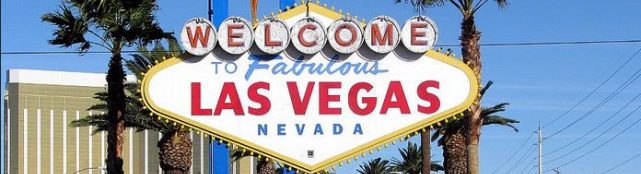
 Everyone knows about “Viva Las Vegas.” That was the hit 1964 movie pairing a sizzling Elvis Presley and Ann-Margret (in real life, too, if you believe the gossip) in a romantic tale of two race-car drivers chasing the same girl. The signature song of the same name remains something of a local national anthem. Despite filming much of the movie on location around Las Vegas (including in the gymnasium of what would become UNLV), the world premier actually was in New York City.
But eight years earlier–and exactly 60 years ago this weekend–the El Portal theater on Fremont St. rolled out the red carpet for the world premiere of another hit musical based and largely shot in Sin City. The flick was “Meet Me in Las Vegas,” featuring Cyd Charisse and Dan Dailey. They were big names in their time–Charisse in particular due to her legs (see nearly movie poster) and dancing ability, although now she’s somewhat faded in movie history beyond a distinctively alliterative stage name (she was born Tula Ellice Finklea). Still, the plot line in MMILV makes it in some ways a more quintessential feel-good period-piece movie about Vegas than Viva! or many of the other movies framed hereabouts. The 112-minute flick still can be seen on various streaming platforms. Continue reading