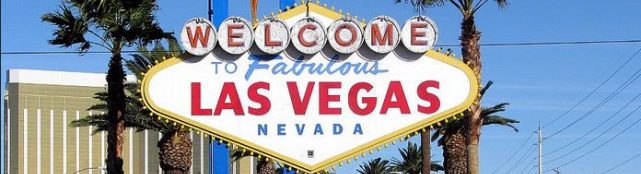
Far from Las Vegas: Phony Roswell Incident hits 75th anniversary

Roswell IncidentJuly 4 today marks the 246th birthday of the country’s founding. But there’s another anniversary of note this week. It was 75 years ago, in 1947, the world learned about something that happened in the New Mexico desert which later became known as the Roswell Incident. Over time–like more than 40 years–the affair morphed into a fantastic account that an alien flying saucer crashed and recovered alien bodies sat in a morgue somewhere amid a giant government cover-up. Notoriety about the Roswell Incident helped spur public interest about UFOs, which continues to this day. Last year, the Pentagon admitted to Congress that it can’t explain 143 incidents dating back to 2004 of what it now calls Unidentified Aerial Phenomena (UAP).

Long before becoming New To Las Vegas, I lived in New Mexico and had occasion more than a quarter-century ago to delve at length into the legitimacy of the Roswell Incident. I took a hard look at the evidence and interviewed a lot of folks.

I’m not here to opine about all the other UFO claims out there (although I once wrote on another blog about the Maury Island Incident, a debunked UFO episode in Washington State the same summer as the Roswell Incident). But I am here to tell you there’s no good evidence that anything extraterrestrial happened around Roswell. And no bodies. The only noteworthy element I found was the ability of the Roswell Incident to turn alleged little green men into actual big green dollars for an army of enthusiasts including certain authors and some Roswell residents. (Las Vegas and Nevada are not immune from UFOs as a business opportunity, either, as I wrote here in 2017.)

In August 1996, I published my investigative findings in Crosswinds, at the time New Mexico’s largest alternative newspaper, co-owned and edited by my good friend, Steve Lawrence. Sadly, both Steve and his publication are now deceased. The lengthy story was entitled “Now where was it those aliens crashed?” The text, with any substantive updates [in brackets like this], is reproduced below. (A version of this post was published in this space in 2019.) Were I writing it from scratch today, I’m not sure I would revise anything beyond adding more evidence of the grift. A later article by me in 2001 also in Crosswinds debunked the Roswell Incident in even greater detail.

The New Mexico map illustrating this post was published with my 1996 story in Crosswinds. Please refer to it as you read, as it pretty much gives away the Roswell con. Continue reading

In Las Vegas there’s vision–and then there’s reality

The “vision statement” on the website of the Clark County (Nevada) Assessor’s Office in Las Vegas says the goal is to become “the most technologically advanced, user-friendly Assessor’s Office in the country.” As this montage of screenshots shows on Wednesday, the day before some property tax cap forms are technically due and taxpayers, including those at the New To Las Vegas world headquarters, are frantically trying to look up their parcel number, the vision is still a bit short of reality.Clark County Tax Assessor

Poor financial efficiencies for first responder ‘faux charity’ illegally trolling Las Vegas

first responder 'faux charity'Recently, at the New To Las Vegas world headquarters I got a cold call from one “Ralph Bennett” soliciting money for Firefighters and EMS Fund, which lists an address in Alexandria, Va. I use quotes because “Ralph” wasn’t a person in the traditional beating-heart sense of the word. Rather, “Ralph” was a voice generated by a computer monitored by a human operator using what is known as soundboard technology. The operator chooses–sort of like a DJ–among scores of pre-recorded sound bites to entice the would-be donor.

“Ralph” went on about how his national organization helped first responders. I cut in and asked if Firefighters and EMS Fund was a charity. “Yes,” he replied. I politely challenged that characterization, suggesting with another question the outfit was simply a political action committee. A PAC most definitely isn’t a charity since, among other reasons, contributions aren’t tax-deductible and it doesn’t do what most folks would consider good works for society.

“Yes,” replied “Ralph” again.

Perhaps even he realized this conversation wasn’t going well from his perspective. “Ralph” finally said Firefighters and EMS Fund was “rebranded” and used to be called Firefighters Support Fund. Now that piqued my interest “Why was it rebranded?” I asked.

“Ralph” hung up.

Poking around the Internet, it didn’t take long to figure out a possible reason for the rebranding. Under its old name, “Ralph’s” organization had drawn negative comments for misleading would-be donors about what it does.

But for me there are two bigger issues. First, from my review of filings, only a sliver of what Firefighters and EMS Fund/Firefighters Support Fund received in contributions was spent for what I would call its stated mission of generating political support for first responders. Almost all the money went for fundraising expense, overhead and, presumably buried somewhere amid thousands of pages of filings, compensation for its operators. Firefighters and EMS Fund is what I called a “faux charity,” a PAC that hopes would-be donors will think it is a real charity. Some other commentators call such operations a “scam charity.”

Secondly, by calling me, Firefighters and EMS Fund violated a Nevada law that look effect last year. The law requires fundraisers working in Nevada for, among other causes, firefighters and public safety to first register with the Nevada Secretary of State’s office and make financial filings. I just checked with the SOSO’s website, and there is no registration for Firefighters and EMS Fund, Firefighters Support Fund or Firefighters Support Alliance, another name associated with the operation.

But don’t bet on Nevada state regulators doing much about it. Continue reading

Bugsy Siegel murder 75 years ago changed Las Vegas forever

Bugsy Siegel

Murdered body of Benjamin (Bugsy) Siegel, Beverly Hills,    June 20, 1947

Seventy-five years ago this month, the most famous murder of consequence in Las Vegas history took place. The killing, which officially remains unsolved, profoundly changed the future gambling mecca forever. Yet the crime didn’t happen here, or even within the state.

I’m referring to the grisly assassination on June 20, 1947, of Las Vegas organized crime boss Benjamin (Bugsy) Siegel. Just 41, he was shot multiple times at point-blank range while reading a newspaper by an unknown sniper wielding a .30 caliber military M1 carbine. Where?  The living room of the home of Siegel’s girlfriend–280 miles away in Beverly Hills, Calif. His eye was found 15 feet from his once-handsome but now blasted-away face, an image immortalized in famous newspaper pictures.

Siegel was a truly despicable character with, despite his relative youth, a decades-long history of murder, extortion and racketeering on both coasts and points in between. Yet his eternal identification with Las Vegas comes notwithstanding his remarkably short residential stint here–barely one year. Public understanding of Siegel is far more myth than fact, thanks to over-hyping authors, short memories and a popular movie portrayal fudging the facts and glorifying his image.

While Siegel with mob money had opened the Flamingo, Las Vegas’s first lavish casino resort on what would become the Las Vegas Strip, it wasn’t his idea at all. Indeed, it is simply false to say that Siegel during his life was the father of the modern Las Vegas gambling-hotel-entertainment scene.

However, it would not be false to say that his death was. Continue reading